Team Results Realty Flat Fee MLS Blog

Point of Sale Inspections When Selling a Property in Northern Ohio

Point of Sale Inspections When Selling a Property in Northern Ohio

What is a Point-of-Sale (POS) inspection

A point-of-sale inspection is a municipality-mandated inspection of a property (often its interior and exterior) that must occur before or at the time a home is sold or ownership transfers. The core idea is ensuring the property meets minimum safety, health and maintenance standards prior to completing the real estate transaction.

In Ohio, many cities (especially in Northeast Ohio) have POS inspection ordinances. Examples:

  • In Cleveland Heights, sellers of single-family and two-family dwellings, duplexes, apartments, condos and commercial properties are required to obtain a Certificate of Inspection (Point-of-Sale) before entering into a contract of sale. City of Cleveland Heights
  • In Shaker Heights, the seller must submit a POS application, schedule the inspection, obtain either a Certificate of Compliance (if no violations) or Certificate of Inspection (if violations) before title transfer. Shaker Heights

In short, POS inspections add a regulatory layer to traditional buyer/seller inspections.

Point of Sale Inspection Ohio Real Estate

Why municipalities adopt POS inspections

Municipalities adopt these programs for several reasons:

  • Protect housing stock and public safety – ensure that real estate transferred is in at least minimally safe, habitable condition (e.g., working smoke/CO detectors, code-compliant systems, no gross hazards).
  • Prevent blight and reduce deferred-maintenance properties – by requiring inspection and compliance at sale, the hope is that underlying problems get addressed rather than passed on to a new owner.
  • Increase transparency in real estate sales so that buyers know what they’re acquiring, and the city doesn’t inherit the burden of neglected properties.

However, the adoption is not uniform across Ohio. Many cities require it, many don’t. According to one list, many municipalities in Cuyahoga and Lake counties require POS inspections, while others explicitly do not. At the bottom of this post is a list of municipalities that require a Point of Sale Inspection.

Key components of POS inspection ordinances in Ohio

Here are common elements you will encounter in municipalities that require POS inspections:

  • Application and fee by seller
  • The seller typically must apply for the POS inspection before or at the time a sale contract is executed. In Shaker Heights, the requirement is submission “prior to entering into a contract with a buyer.”
  • Fees vary: e.g., in Shaker Heights: single-family $200 fee, two-family $300, condo $150.
  • In Cleveland Heights: $200 for first unit, $50 for each additional unit.
  • Inspection of property interior + exterior (in many cases)
  • The inspection generally covers visible conditions inside the home (plumbing, electrical, heating/vent, fire/smoke alarms, structural hazards) and visible exterior components (roof, siding, steps, decks, sidewalks).
  • Some jurisdictions require only exterior inspections; others both. For example, in Northeast Ohio listing: Oakwood requires an exterior only POS in one city.
  • Certificate issuance

After inspection, one of two common outcomes:

  • A Certificate of Compliance – property passed inspection / no major violations, and the certificate is valid for a specified time (often 1 or 2 years) for a future sale without re-inspection.
  • A Certificate of Inspection – property has violations that must be corrected within a defined timeframe before title transfer or escrow established. For example, Shaker Heights: if violations remain uncorrected at time of transfer, buyer must establish an escrow account with funds equal to 150% of estimated repair cost.
  • Repair requirement or escrow account
  • If violations are identified, the seller (or new owner) must correct them. If they cannot be corrected before transfer, many cities require the creation of an escrow or deposit of funds with the city to guarantee repair. E.g., in Cleveland Heights: if Class A violations are uncorrected, escrow amount must be at least $1,000 and equal to 125% of estimated repair cost.
  • Timeframes vary, but typical is 90 days for corrections or schedule of progress. Shaker Heights: seller must correct violations within 90 days after Certificate is issued.
  • Validity period of certificate
  • Many ordinances set that once a property has passed inspection, the certificate is valid for a defined time for a future sale without re-inspection. Example: Shaker Heights certificate is valid for 24 months from inspection date.
  • In Cleveland Heights it is valid for one year from issuance for transfer.

Where POS inspections apply (and where they don’t)

Not all municipalities in Ohio require POS inspections. It’s very local. Here are important caveats:

  • Some municipalities require them for all residential sales (single-family, two-family, condos); others might only require if certain conditions (e.g., rental units, well/septic systems) apply.
  • According to a Northeast Ohio list: many cities do not have POS inspection requirements. For example: Bay Village (no POS), Beachwood (no POS), North Olmsted (no POS).
  • Some municipalities require only certain components (e.g., exterior only, wells/septic only).
  • Therefore, when buying or selling in Ohio one must check the city/township regulations for that particular property.

Impacts on Buyers, Sellers & the Market

For Sellers

  • Additional time, cost and risk. Sellers may need to apply for the inspection well before listing or executing a contract. Repairs or escrow requirements may delay closing.
  • Risk of lower sale price or loss of buyer if the inspection reveals significant violations and the buyer is unwilling to assume risk or escrow.
  • In some markets, sellers without POS requirements may have a competitive advantage (faster closings, fewer surprises).

For Buyers

  • POS inspections can increase transparency – the buyer receives a certificate and report on property condition via the municipality.
  • But they may also face delays and potential repair escrows if the seller expects the buyer to accept responsibility. Some buyers report frustration with last-minute demands for large escrows.
  • In markets with POS inspections, buyers might find slower transaction times.

For the Market Overall

  • Studies suggest that POS inspection requirements may depress home sales and prices. For example: a 2025 study by Akron Cleveland Association of REALTORS found in POS municipalities: significantly lower transaction rates and average sale price 13% lower vs similar properties in non-POS areas. Here is an article realted to that topic: Akron Cleveland Association of REALTORS
  • Policy debates: Some argue POS inspections improve housing stock and public safety; others argue they put burdens on sellers and restrict market activity. For example: an op-ed described POS as “obsolete” in some cities, arguing private inspections suffice and government mandates impose costs and bureaucracy. Here is an article related to that topic: heightsobserver.org

What Buyers & Sellers Should Do (Checklist)

For Sellers

  • Know your municipal requirements: Before listing, check whether your city requires a POS inspection, and if so the fee, timeline, application process and typical wait time.
  • Time the inspection wisely: Ideally complete the POS inspection before you accept an offer, so any required repairs or escrow issues are resolved in advance. Some listing agents advise obtaining POS clearance prior to marketing.
  • Budget for possible repairs or escrow: If the inspection reveals violations, you may need to pay for repairs or establish an escrow account equal to 100-150% of estimated cost in your city (e.g., escrow equal to 150% in Shaker Heights)
  • Coordinate with your real-estate agent and title company: Ensure the certificate will be delivered/faxed to closing agents in time.
  • Disclosures & smart listing strategy: Use the inspection findings to avoid surprises, and factor any necessary repairs into your listing price or negotiation strategy.

For Buyers

  • Ask your agent whether the subject property is in a POS-municipality. If so, find out whether the inspection has been completed and certificate issued.
  • Review the certificate/report carefully: Understand whether a Certificate of Compliance was issued or Certificate of Inspection with required repairs/escrow obligations.
  • Consider timing and escrow risks: If the seller is passing responsibility (or escrow requirement) to you, understand how that affects your closing timeline and budget.
  • Don’t rely solely on POS inspection: Municipal POS inspections are not a substitute for a full private home inspection. Many buyers still opt for private inspections to identify issues beyond code violations.
  • Negotiate accordingly: If major violations are flagged, consider adjusting your offer, renegotiating repairs, or requesting escrow release.

For Real-Estate Agents

  • Be familiar with local POS rules: Know which cities require inspections, the process, fees, typical timelines, and escrow rules in your market area.
  • Advise clients early: For sellers, recommend initiating the inspection process early; for buyers, include POS findings in offer strategy and timeline.
  • Monitor impact on closings: Understand how POS requirements may delay closings or cause deals to fall through, and plan accordingly (e.g., adding clauses or contingency time).

Trends, Challenges & Potential Changes

  • Market pressure: Because many cities with POS inspections face slower sales or lower prices (per studies), there is political pressure to revisit or revise POS requirements. The Akron Cleveland Association of REALTORS is actively advocating for ending or altering POS mandates. realtorparty.realtor
  • Variation across municipalities: There is large city-to-city variation in how comprehensive the inspection is (interior + exterior vs exterior only), fees, escrow requirements, and enforcement. This unpredictability complicates transaction planning.
  • Transaction delays: In busy markets, inspection scheduling, repairs and escrow establishment can add weeks to a closing timeline. A Reddit user noted waiting two weeks after inspection to get certificate from a NE Ohio municipality. Reddit
  • Equity / affordability concerns: Some critics argue that POS programs disproportionately burden lower-cost homes and price-sensitive sellers/buyers. Escrow or large repair requirements may deter sales or reduce final sale proceeds. The study noted homes sold for less in POS municipalities.
  • Alternative models: Some experts suggest that private inspections could suffice (as they already are standard in many transactions) and that municipal POS mandates may be scaled back or replaced with more targeted inspection programs.

What This Means for Ohio Home Transactions Today

  • If you’re selling in an Ohio city that has a POS requirement, anticipate extra steps: application, scheduling inspection, certification, possible repairs/escrow, additional fees, and likely some additional time before closing.
  • If you’re buying, especially in a city with POS requirements, be aware that inspection issues may affect timeline, closing cost, and potentially the price. You’ll want your contract to reflect any obligations tied to the POS certificate.
  • Because POS requirements vary widely across municipalities, the same county or region may have cities with and without POS. Checking the local ordinance for the city of the property is essential early in the process.
  • For sellers, completing the POS inspection and resolving violations before listing can reduce risk of deal collapse or buyer walk-away due to certification problems.
  • For buyers, ensure that any offer acknowledges POS status (for example: has inspection been done; will seller provide certificate; if violations remain, who will assume escrow/repair responsibility) and that your agent is familiar with POS implications in that city.
  • For agents, especially listing agents, build POS inspection compliance into your listing timeline and budget, and educate your clients so they are not surprised by delays, cost, or escrow requirements.

Here is a list of some municipalities that require Point of Sale Inspections

(Note: POS Requirements change from time to time but this is a current list from Nov 2025)

Cuyahoga County

Cleveland Heights

Point of Sale Inspections – City of Cleveland Heights
All residential properties require a POS inspection prior to transfer.

Shaker Heights

Point of Sale Procedure – City of Shaker Heights
Required before listing or sale; covers interior and exterior conditions.

University Heights

Point of Sale – University Heights
Required for all 1- and 2-family dwellings before transfer.

Garfield Heights

Point of Sale Inspections – Garfield Heights
Inspection required prior to transfer of any residential or commercial property.

Mayfield Heights

City FAQ – POS Requirement
Seller must obtain a POS inspection before transfer.

Bedford

Building Department – Point of Sale Inspections
Inspection required before transfer of ownership.

Bedford Heights

Building Department – Point of Sale
POS inspection required for all residential properties before transfer.

Euclid

Building Department – Point of Sale
Mandatory POS inspection for residential sales.

South Euclid

Point of Sale Inspections – South Euclid
Required for residential properties prior to sale.

Maple Heights

Building Department – POS
POS inspection required before transfer.

Lake County

Willoughby

Point of Sale Inspection – Willoughby
Inspection required prior to transfer of title.

Eastlake

Building Department – POS Inspections
POS inspection required for single-family homes.

Summit County

Macedonia

Building Department – POS
Inspection required prior to transfer.

Northfield Village

Building Department – Point of Sale
POS inspection required for all residential properties.

By |2025-11-03T14:53:42-05:00November 3rd, 2025|Uncategorized|0 Comments

Selling Your Home: For Sale by Owner vs. Using a Flat Fee Listing Broker

Fior Sale by Owner

Selling Your Home: For Sale by Owner vs. Using a Flat Fee Listing Broker

Selling your home is one of the biggest financial decisions you’ll make, and choosing how to sell it can dramatically affect your bottom line, your stress level, and how smoothly the transaction goes. Many homeowners are drawn to the idea of selling their property themselves—known as For Sale by Owner (FSBO)—in an effort to save on real estate commissions. Others prefer a hybrid approach: using a flat fee listing broker, who offers some of the benefits of a traditional agent without the full commission cost.

Understanding the pros and cons of each method can help you make an informed decision that aligns with your financial goals, timeline, and comfort with the home-selling process.


What Does “For Sale by Owner” (FSBO) Mean?

When you sell your home For Sale by Owner, you take on all the responsibilities that a licensed real estate agent would normally handle. Here are some of the major task you will handle as a For Sale by Owner:

  • Setting the listing price

  • Marketing and advertising the property

  • Handling showings and hosting open houses

  • Negotiating offers

  • Managing paperwork and disclosures

  • Coordinating with appraisers, inspectors, and attorneys/title agencies

For sale by owner sellers aim to save money by avoiding the typical 5–6% real estate agent commission, which can translate into thousands—or even tens of thousands—of dollars.


Lets Discuss Pros of Selling Your Home For Sale by Owner

1. Saving on Commission Fees

The most obvious benefit of FSBO is avoiding the full listing agent commission.

  • In a traditional sale, the seller pays both the listing agent (typically 2.5–3%) and the buyer’s agent (another 2.5–3%).

  • On a $400,000 home, that could mean $20,000–$24,000 in total commission fees.

  • By selling yourself, you might only need to pay the buyer’s agent commission (if the buyer is represented), or potentially none at all if the buyer comes directly to you.

2. Full Control Over the Process

You set your own schedule for showings, decide how to market your home, and determine how to negotiate offers. There’s no middleman influencing your decisions or pressuring you to accept certain terms.

3. You Know Your Home Best

As the owner, you can highlight the home’s features, upgrades, and neighborhood benefits in a personal way that agents might overlook. Your firsthand knowledge can create a more authentic connection with potential buyers.

4. Flexible Pricing and Negotiation

Without an agent taking a commission, you may be more flexible in your pricing. You can adjust your list price or negotiation strategy on the fly without consulting anyone else.

5. Direct Communication with Buyers

You can talk directly with potential buyers, answer questions immediately, and gauge their seriousness without messages going back and forth through agents.


The Cons of Selling Your Home For Sale by Owner

While the idea of saving on commission sounds appealing, For Sale by Owner isn’t without its challenges. In fact, many sellers underestimate the time, effort, and expertise involved.

1. Limited Market Exposure

Homes listed For Sale by Owner aren’t included in the Multiple Listing Service (MLS)—the database that agents use to share listings with one another and major websites. Without MLS access, your home’s visibility drops dramatically. Most buyers search online, and the MLS delivers listings to major real estate sites like Zillow, Realtor.com, and Redfin through and IDX feed. The MLS feeds listings to several hundred websites.

2. Pricing Challenges

Setting the right price is crucial. Overpricing can cause your home to linger on the market, while underpricing leaves money on the table. Agents rely on comparative market analysis (CMA) and access to up-to-date sales data—resources not easily available to homeowners. For Sale by Owner sellers often struggle to find the pricing “sweet spot.”

3. Negotiation Difficulties

Negotiating directly with buyers or their agents can be intimidating. Buyers’ agents are trained negotiators, and For Sale by Owner sellers may lack experience in counteroffers, contingencies, and repair requests—potentially costing thousands in concessions. An experienced buyer agent will use every method possible to get more money out of a seller to benefit their client “the buyer”.

4. Legal and Paperwork Complexities

Real estate transactions involve numerous legal forms, disclosures, and deadlines. Missing a required document or failing to disclose certain property details can lead to costly legal consequences. Some real estate contracts commit the seller spending money on repairs automatically if a deadline is missed.

5. Time and Stress

Handling every detail yourself—marketing, scheduling showings, answering calls, and managing paperwork—takes significant time and effort. Many For Sale by Owner sellers find the process overwhelming, especially when balancing work, family, and moving logistics.

6. Buyer Bias Against For Sale by Owner

Some buyers (and their agents) are hesitant to deal with For Sale by Owner sellers. They may assume the seller is difficult to work with or unrealistic about price, which can limit serious buyer interest.


What Is a Flat Fee Listing Broker and how can they Assist a For Sale by Owner?

A flat fee listing broker offers a middle ground between full-service agents and For Sale by Owner.

With this model, you pay a one-time flat fee—often between $300 and $1,000—to have your home listed on the MLS and other major real estate websites. You still handle showings, negotiations, and closing details, but you gain the visibility and professional tools of a licensed agent’s listing.

Some flat fee brokers offer more than others depending on the package price:

  • Professional photography

  • Contract review or consultation

  • Marketing materials

  • Lockboxes or signage

This hybrid model allows sellers to maintain control while accessing the MLS and professional resources.


The Advantages of Using a Flat Fee Listing Broker

1. Access to the MLS

This is the biggest advantage. MLS exposure dramatically increases your property’s visibility to agents and buyers. Since the MLS feeds listings to major real estate websites, your home can show on hundreds of websites and reach thousands of potential buyers within hours.

2. Huge Cost Savings

  • You pay a flat upfront fee—often less than 1% of your home’s price.

  • You and still pay a buyers agent commission which is negotiated in the purchase contract

  • Typically a buyer’s agent commission (around 2.5–3%), but could be as low as zero and you save the entire listing agent commission.

  • On a $500,000 home, that could mean saving $12,500–$15,000 compared to a traditional full-service listing.

3. Retain Control of the Sale

You maintain autonomy over:

  • Showing schedules

  • Negotiations

  • Pricing decisions

  • Communication with buyers and agents

This allows flexibility while still enjoying professional listing exposure.

4. Professional Appearance

Because your home appears on the MLS, it gains credibility. Buyers’ agents are more likely to take the listing seriously compared to a For Sale by Owner ad on social media or a classifieds site.

5. Optional Support

Many flat fee brokers offer add-on services if you need help at certain points. You can purchase contract assistance, professional photography, or marketing support without committing to a full-service commission.

6. Faster Sales and Better Offers

Homes listed on the MLS—whether via flat fee or traditional agent—tend to sell faster and closer to asking price. Exposure to a broader audience usually leads to more showings and competition among buyers.


Minimal Drawbacks of Flat Fee Listing Brokers

1. You Still Handle Much of the Work

Even though your home is on the MLS, you’re still responsible for showings, negotiations, and paperwork unless you pay for additional support. Sellers who want a hands-off experience may find this model too demanding.

2. Upfront Cost

Flat fee listings require payment regardless of whether your home sells. While the cost is much lower than a full commission, it’s still a non-refundable investment.

3. Limited Personalized Service

Unlike traditional agents, flat fee brokers don’t actively market your home, host open houses, or provide in-depth guidance. You’ll need to be proactive in managing inquiries and keeping your listing updated.

4. Potential for Miscommunication

Because you’re still doing most of the selling, missteps in communication or negotiation with buyer’s agents can occur if you’re unfamiliar with the process.


For Sale by Owner vs. Flat Fee Listing Broker: A Side-by-Side Comparison

Feature For Sale by Owner (FSBO) Flat Fee Listing Broker
MLS Exposure ❌ Not included ✅ Included with most flat fee packages
Upfront Cost Low or none Typically $300–$1,000
Commission Savings Save full 5–6% Save 5–6% (minus upfront fee)
Seller Control Full control Full control
Professional Support None Optional, à la carte
Marketing Reach Limited to social media and FSBO sites Wide exposure via MLS and major websites
Negotiation Help None Optional (extra fee)
Time Commitment High Moderate

Which Option Is Right for You?

Your ideal approach depends on your comfort level, experience, and priorities.

Choose For Sale by Owner if:

  • You have real estate experience or are confident handling negotiations and paperwork.

  • You already have a buyer lined up.

  • You’re selling in a hot market where homes sell quickly with minimal marketing.

  • You’re highly motivated to save every possible dollar in commission.

Choose a Flat Fee Listing Broker if:

  • You want maximum exposure on the MLS without paying full commission.

  • You’re comfortable handling some of the selling tasks yourself but want professional visibility.

  • You value flexibility and cost savings.

  • You want maximum exposure to all buyers in your market.


Tips for Success in Either Approach

Regardless of which method you choose, these steps can increase your chances of a smooth and profitable sale:

  • Price Realistically: Use online tools and recent comparable sales to set an accurate price.

  • Stage Your Home: Declutter, clean thoroughly, and make small upgrades to boost appeal.

  • Use Professional Photos: High-quality images attract more online attention.

  • Market Aggressively: Share your listing on social media, neighborhood groups, and real estate platforms.

  • Be Responsive: Answer inquiries promptly to avoid losing interested buyers.

  • Understand Legal Requirements: Review your state’s disclosure laws and required documents.


Conclusion

Selling your home For Sale by Owner can save you money—but it also requires time, skill, and effort. Many homeowners find the process daunting once they realize how much goes into pricing, marketing, negotiating, and managing paperwork.

A flat fee listing broker offers a smart compromise: you gain the exposure and credibility of an MLS listing without paying a full-service agent’s commission. While you’ll still need to handle some of the work, this model provides professional visibility and cost savings that make it an attractive option for many sellers.

In today’s real estate market, where online exposure and informed buyers dominate, using a flat fee listing service can strike the perfect balance between independence and professional support—helping you sell faster, smarter, and for more money in your pocket.

By |2025-10-31T09:45:39-04:00October 31st, 2025|Uncategorized|0 Comments

How to Negotiate Realtor Fees

How to Negotiate Realtor Fees:

A Guide for Home Buyers and Sellers

When buying or selling a home, one of the largest transaction costs you’ll encounter is the real estate commission and how to negotiate realtor fees. In the past these fees were often considered “standard,” but since the NAR settlement in August of 2024 the eyes of the consumers have been opened. The truth of the matter is real estate commissions have always been negotiable but realtors didn’t tell their clients this and instead told their clients they had to pay a certain amount typically 6% split evenly (3% and 3%) between the seller broker and the buyer broker. The settlement of the class action lawsuit (Sitzer/Burnett) in 2025 has made it very clear commissions are negotiated.

Here’s what you need to know about how to negotiate realtor fees, including what’s typical, when it makes sense to negotiate, and how to do it respectfully and effectively.


What is a Realtor Fee?

Realtor fees or real estate commissions are the payment made to real estate agents for their services. Normally they are a percentage of the sales price. Typically, the seller pays the commission, which is then divided between the listing (seller’s) agent and the buyer’s agent. If you are selling a Million Dollar home you would typically pay much more than if you sold a $100,000 home.

  • $1,000,000 x 6% = $60,000 in commission
  • $100,000 x 6% = $6,000 in commission

The irony of the situation is it’s often easier for agents to sell a Million Dollar home than it is to sell a $100,000 home but the realtors selling a Million Dollar home get paid ten times more. Wouldn’t it make sense to negotiate realtor fees?


Are Realtor Fees Negotiable?

Yes. Realtor fees are not fixed by law. They’re entirely negotiable, although some agents may be more flexible than others.

Negotiating Realtor fees is more common than you might think—especially in a market where:

  • Homes are selling quickly (seller’s market)
  • You’re buying/selling multiple properties
  • You’re working with a discount real estate broker or flat fee brokerage
  • The agent is newer and trying to build their client base

When Should You Negotiate Realtor Fees?

You might consider negotiating fees if:

  1. When the market is hot.
    If homes are selling quickly in just a few days with multiple offers, an agent is more likely to be willing to reduce their rate since they’ll likely spend less time marketing the property.
  1. When you’re selling a home in a higher price range.
    When selling a very expensive home an agent might be willing to lower their fees. Even a small percentage reduction can still result in a sizable commission. Agents may agree to lower their rate to secure the listing when competing with other agents.
  1. When you’re buying and selling with the same agent.
    If you’re using one agent (Dual Agency) for both your sale and purchase, they may be open to a package deal.
  1. When You’re doing some of the legwork.
    If you’re handling staging, photography, or showing the home yourself, you may ask for a reduced fee.

How to Negotiate Realtor Fees (Without Burning Bridges)

  1. Do Your Homework
    Research typical commission rates in your area. Talk to a few agents, and see how their services and fees compare. Knowledge is power—and leverage.
  1. Begin the conversation before committing
    Discuss commission before signing a listing agreement. It’s much easier to negotiate Realtor fees before any paperwork is finalized.
  1. Be Respectful and Professional
    Phrase your ask carefully. For example: “I’ve seen Realtor commission rates vary a bit in this area. Is your commission flexible, especially given how quickly properties are selling right now?”
  1. Focus on Value
    Instead of just asking for a discount, frame your request as a win-win benefit: “If I buy and list with you, would you consider lowering the total commission since you’ll earn a fee from both sides of the deal?”
  1. Make sure there is a contract
    If the agent agrees to reduced fees, make sure it’s clearly outlined in your listing or buyer’s agreement.

Alternatives to Traditional Commission Models

If a traditional commission structure doesn’t work for you, consider alternatives:

  • Flat Fee Listing Broker – With a flat fee Realtor you pay a set amount to list your home on the MLS. Some flat fee MLS listing agents even offer full service packages with a set fee. These types of listing brokers are becoming increasingly popular.
  • Discount listing Brokerages – Discount brokers offer full service for a reduced rate (e.g., 1%-2% listing fee).
  • FSBO (For Sale by Owner) – No agent fees, but more work and risk involved. There is no MLS marketing with a FSBO listing. All marketing is done by the seller.

A Final Note:
When interviewing agents, weigh the value they bring against the cost. If you find someone who’s experienced, communicative, and invested in your success, it may be worth paying a fair (but negotiable) fee or a flat fee.

Bottom Line:
Realtor fees are not fixed or set in stone. With the right approach, timing, and communication, you may be able to negotiate Realtor fees for a better deal—without compromising the quality of your real estate experience.

By |2025-10-30T07:56:41-04:00October 26th, 2025|Uncategorized|0 Comments

4 Best LOCAL Ohio Flat Fee MLS Listing Brokers 2023 Ratings

4 Best LOCAL Ohio Flat Fee MLS Listing Brokers

These are the 4 best local flat fee MLS listing companies in Ohio. The reason we are ranking local companies is because these are the brokers who are the boots on the ground actual people with years of experience selling property in Ohio every day. These are the brokers who must adhere to Ohio real estate laws and are held accountable by the Ohio Division of Real Estate. These are the people who live where you live.

THESE ARE NOT 3rd PARTY REFERRAL COMPANIES

Third party referral companies are often large internet companies with fancy websites that advertise flat fee MLS listings. They collect your money and you get assigned to an unknown realtor who usually has additional fees either upfront and/or at closing. With third party sites you often don’t know what you’re getting until after you have already paid for the service. There are many of these types of internet sites popping up and most are not real estate companies that are required to follow government regulations. Some are under investigation by the real estate commission and are not even based in the United States. Beware of these types of flat fee listing services.

OHIO FLAT FEE MLS companies have been around for many years. More and more home sellers are realizing they do not need to pay high 6% commissions to sell their property. Our flat fee service is designed to get you maximum marketing exposure through the MLS and hundreds of other websites while saving you thousands of dollars in fees. You can read more about our different flat fee listing plans here or read our FAQ page here.

Here are 4 Best LOCAL Flat Fee MLS Listing Brokers in Ohio

Flat Fee Listing Company Price Additional or Hidden Fees 100% Online Offer Management Showing Service Maximum Photos Allowed 5 Star Zillow Reviews Buyer Lead Forwarding Free Unlimited Changes
Ohio Team Results $299 to $999 None
most plans
Chosen Real Estate Group $199 to $849 Unknown
Ohio Property Group $297 to $997 Extra fee for rush order/changes
most plans
Flat Fee Group $299 to $999 None
most plans


EXPERIENCE AND RESULTS

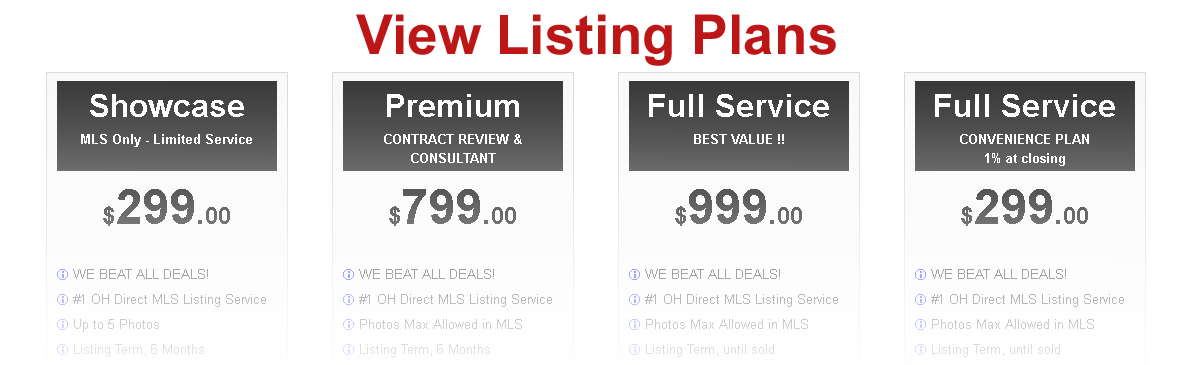
Scott Marvin is a local Ohio broker with over 20 years as a licensed real estate agent. He and his team have negotiated thousands of closings all over Ohio. Their decades of experience will insure you have a successful transaction and their reviews prove it. If you are looking for the best bang for your buck and proven results then this is your pick. Unlike a 3rd party referral site you will know exactly who you are working with and will have direct access to Scott and his team. Scott and Team Results Realty believe they have the best listing packages available. If you find something better they will beat any other offering. Their packages start at $299 and go to $999 for a full service listing. All of their packages allow max photos, same day service, unlimited changes, and all documents needed to sell your property without extra fees.


        

NEW KID ON THE BLOCK

Nick Huscroft is the Principal Broker of Chosen Real Estate Group. According to the Ohio Division of Real Estate Nick received his broker license in 2022 and has been offering flat fee listings through his brokerage since that time. Chosen Real Estate group offers 3 packages ranging from $199 to $849. Chosen Real Estate Group does not charge for changes and we know of no known hidden fees. They are not fully automated and limit photos to 25 but they offer some competitive packages.


    

HIGH VOLUME

Glenn Whitten of Ohio Property Group has been in the real estate business for about 20 years and has been doing the flat fee model for most of that time. Ohio Property Group does a large volume of flat fee business in Ohio and has plenty of real estate experience. Their turn around time is within 48 hours. Offer/counter-offer forms and response templates are not included with their basic plan, so additional services will be necessary. Glen his wife and children run the business and he will be the first to tell you that he’s the most fortunate person on the planet.

    

NATIONAL NETWORK

Flat Fee Group is a national network of Flat Fee Brokers. They serve all states in the U.S. Each state is represented by a certified Flat Fee Broker. They serve the local Ohio market and have been one of the founding fathers of flat fee listings nationally.


We can’t stress enough the importance of using a local flat fee broker. As mentioned above all of these flat fee MLS brokers are located in Ohio and licensed in Ohio. They all meet the State of Ohio requirements to list properties in the MLS. The only way a property can be listed in the MLS is through a licensed real estate broker. You are in good hands with any of these flat fee listing brokers.

By |2025-10-31T10:23:03-04:00March 21st, 2023|Uncategorized|Comments Off on 4 Best LOCAL Ohio Flat Fee MLS Listing Brokers 2023 Ratings
Go to Top